Rug pull
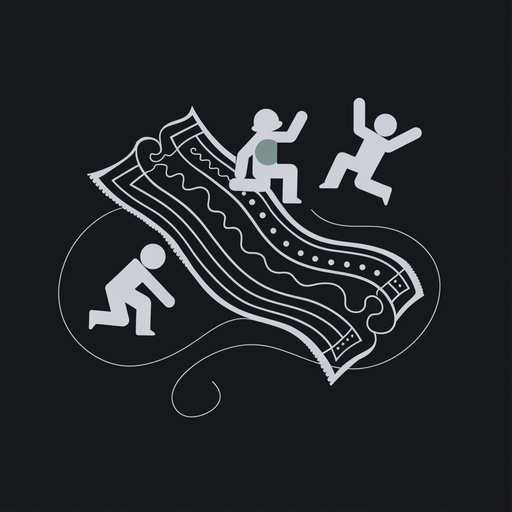 Image: original illustration, memecoin.wiki | |
| part of speech | noun, also shortened to rug, used as noun and verb |
|---|---|
| scene | Solana trenches, crypto Twitter, DeFi |
An exit scam in which the creators of a token abandon the project and extract its value, leaving holders with a worthless asset.
A rug pull is an exit scam in which the creators of a crypto token abandon the project and extract its value, leaving buyers holding a worthless asset. The name evokes pulling a rug out from under someone. In the trenches the term is routinely shortened to "rug," which also serves as a verb ("the dev rugged") and produces derivatives such as "rugged" and "rug check."
Mechanics
Analysts commonly distinguish two broad forms. A hard rug pull is engineered in advance: the contract contains a malicious mechanism, such as a hidden mint function, a blocked sell path as in a honeypot, or the ability to withdraw pooled liquidity, and the creators trigger it once enough money has entered. A soft rug pull requires no special code: insiders or the dev simply dump a large token allocation into the market, collapsing the price. On launchpads like pump.fun, where liquidity handling is automated and cannot be withdrawn by the creator, the dominant pattern is the soft rug, often combined with a bundle of insider wallets holding much of the supply. Buyers who purchase just before the dump serve as exit liquidity.
Usage
"Rug" is one of the most common words in trenches vocabulary because the event is so frequent; the majority of new meme coins end in some form of rug or abandonment. Traders run automated "rug checks" on new tokens, inspecting holder concentration, creator history, and contract permissions. A token abandoned by its creator but adopted by holders may undergo a cto.
History
The term entered wide use during the 2020 and 2021 DeFi and meme coin cycles, when liquidity withdrawal scams proliferated on decentralized exchanges. Onchain analytics firms cited by industry tutorials estimate that rug pulls drain billions of dollars from retail buyers each year, making them among the most costly categories of crypto fraud.
References
- https://www.coinbase.com/learn/tips-and-tutorials/what-is-a-rug-pull-and-how-to-avoid-it
- https://koinly.io/blog/crypto-rug-pulls-guide/
- https://www.dextools.io/tutorials/what-is-a-rug-pull-in-crypto-guide-2026
- https://www.financemagnates.com/cryptocurrency/what-is-a-rug-pull-types-how-to-avoid-them/